Chen, Mitropoulos and Nakazawa (Cloudflare / VoidZero)
💡 Max Schwenk started the port with agents writing the code, and tells the full tale here, including how it took his company's typecheck from 80 seconds to 7.
Send Webhooks from Your TypeScript API in Minutes — One typed npm package, one call per event. Svix handles retries, signing, delivery logs, and a portal for your customers, so you don't build any of it. Resend sends 200M+ webhooks a year through it.
Node.js v26.12.0 (Current) and v24.22.0 (LTS) – 26.12 can now synchronously load most ES modules and marks the config file stable; 24.22 gains util.throttle and util.debounce.
Astro 7.4 – Adds a --timings flag for astro build to see where build time is spent, plus experimental parallel prerendering across worker threads.
React Router 8.5 – Deprecates its own view transition APIs in favor of React's <ViewTransition> component, and adds an experimental 'API-only' mode.
Pretext 1.0 – Multiline text layout without touching the DOM. 1.0 ports browsers' own line breakers, so results more closely match what would render.
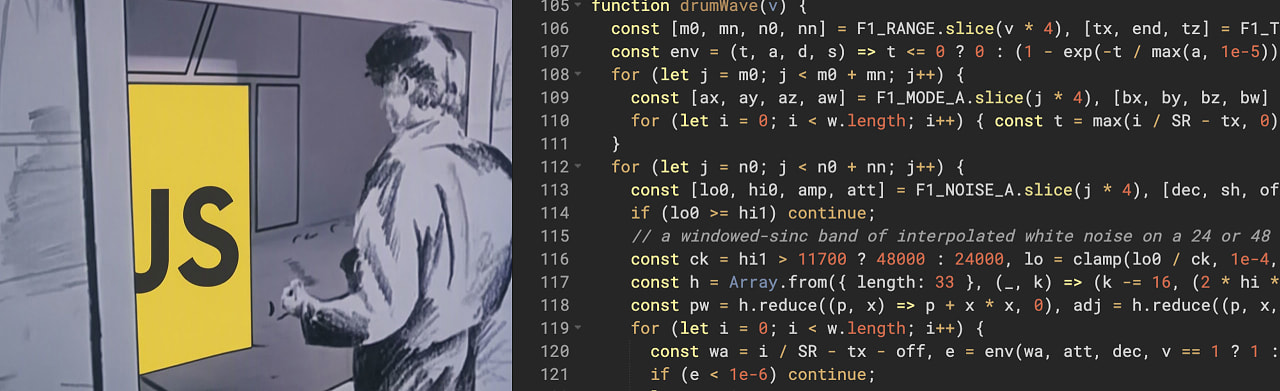
The Tetris Script That Becomes Snake Once Prettified? — You'd think pretty-printers and deobfuscators at least leave a script's logic alone, but no. See how chaining semantic quirks in such tools can turn the 'cleaned up' output into a different program!
▶ ViteConf 2026: The Full Replay — Last week's ViteConf brought ~30 talks including Evan You's keynote on tooling in the agentic era, plus updates on Vitest 5, Vite DevTools, and a faster parser coming to Oxc. It's 10 hours, but there's a hero with timestamps in the comments.
How to Gaslight JavaScript Programmers (with Proxies) — Proxy, introduced as part of ES6 back in the day, has plenty of practical uses but can also make objects behave in curious, unexpected ways. Complete with live, editable examples.
📊Chartist 2.0: The Lightweight SVG Charting Library Returns — A CSS-styled SVG charting library from 2014 that "went stale over the last years" makes a comeback with a composable API, server-side rendering to SVG, terminal charts, and still ~12KB gzipped for a line chart. There's a migration guide for 1.x users.
A new social network:/dev/null is a GitHub-oriented social network for developers, built from scratch in 48 hours. It already has over 8000 members, including me. It's been a lot of fun so far!
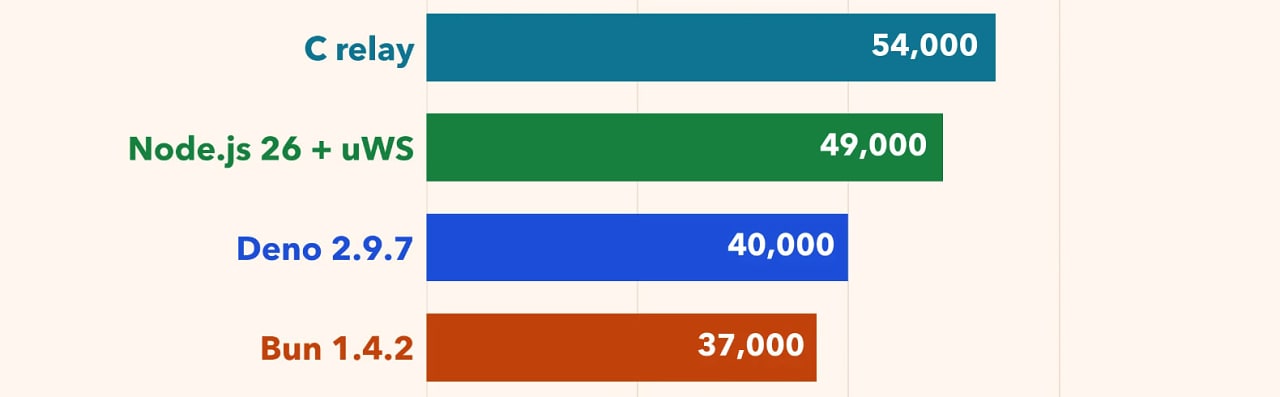
Deno is Joining Cloudflare (But…) — Maybe David Bushell saw the writing on the wall, as the Deno team isn't joining Cloudflare to keep working on Deno, but to fold celld into workerd so Durable Objects can be self-hosted (more on that here). The Deno runtime will get a final year of official fixes, Deno Deploy closes in six months, and JSR moves to Cloudflare's infrastructure.
Ryan Dahl
💡 On Hacker News, Ryan Dahl noted that Deno "has been sucked into the gravity well of Node compatibility" before asking: "Why reimplement Node? It works." But what happens to the JavaScript™ trademark case, I wonder…?
CodeAF: #1 of Ten Coding Harnesses on DeepSWE — Ten coding harnesses ran the same open model on 113 real GitHub issues. CodeAF solved the most and paid the least per solved issue: 3.4x less than Claude Code, 4.8x less than OpenCode. A new open-source coding harness built for open models.
AgentField AI sponsor
Bun 1.4.3 Adds bun check, a Built-In TypeScript Type Checker — bun check is a port of TypeScript 7's checker that reads your tsconfig.json, reports the same errors as tsc and, Jarred claims, runs 3-6x faster. It plugs into bun run/test/build too. Idle server processes now use far less CPU, and a JavaScriptCore upgrade picks up numerous perf gains.
Jarred Sumner
IN BRIEF:
AWS has launched Lambda Web Functions, which run an ordinary port-listening Node server (Express, Hono, Fastify, etc.) on Lambda with no handler rewrite, billing for active CPU time and separately for memory.
Last second addition:TanStack Start 1.0 has just dropped. Big news for full-stack React and Solid fans! :-)
🎉 Partytown 1.0 – A popular way to relocate third-party scripts to run in a Web Worker rather than on the main thread has left beta after five years in development.
Marionette 5.0 – Six years on, the Backbone-era framework returns with a core free of Backbone, jQuery and Underscore… and they explain why!
Bootstrap 6 Alpha – An early look at Bootstrap's first major release since 2021, leaning on modern CSS and making its JavaScript plugins ESM-only.
Express 5.3.0 – A maintenance release worth upgrading to, as patched qs, proxy-addr and body-parser dependencies close five CVEs.
How Sindre Sorhus' Personal Site is Now Made in Swift — One of JavaScript's most prolific developers explains how he's dropped Astro and now builds his personal site with Swift, including the styling and markup, with broken links and style typos failing at compile time (source).
📄 Six Months of Building with Remix 3 – What the post-React Remix (v3 was released earlier this month) is like to work with day to day. Sergio Xalambrí
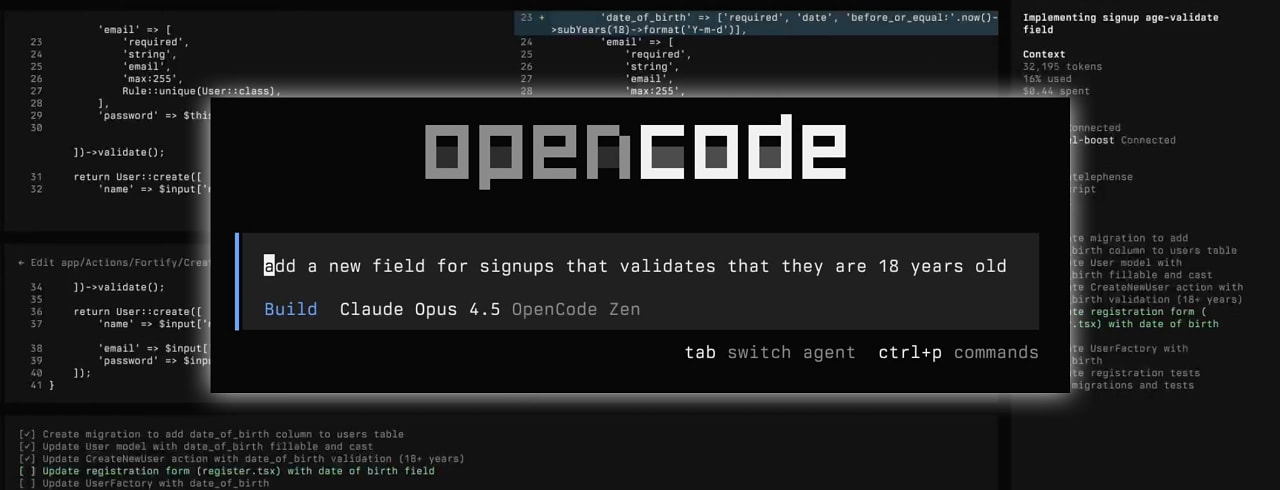
🤖OpenCode 2.0: A Big Update for the Open Coding Agent — A full-featured agentic coding app, built on Bun, that's more akin to Claude Code than Pi, say. v2.0 overhauls it with background subagents, a 'code mode' to let models script MCP tool calls, and clients for vanilla JS and Effect code to drive it.
Anomaly / The OpenCode Team
💡 If you've not given OpenCode a try yet, you can get started here.
Tamagui 3: One React UI Codebase for Web and Native — A styling system and component kit for sharing UI between React web apps and React Native, with a compiler that keeps things fast on both. v3 adds Tailwind-style props and React Strict DOM support.
H3 v2: The UnJS HTTP Framework Rebuilt on Web Standards — The minimal HTTP framework behind Nitro and Nuxt's server layer is now stable in v2, a rewrite around standard Request and Response so the same app runs on Node, Bun, Deno, Workers, and even in the browser. Migration guide.
⚡️Add lightning-fast 1D/2D barcode scanning to your web app with STRICH. On-device processing, free trial and demo!
Durable AI agents built with the AI SDK you already use. Long-lived LLM sessions that survive deploys, crashes & refreshes. Test out chat.agent on Trigger.dev.
🎬 Your app needs video, not a video team. Upload any format to Hyperserve's API, get back MP4 on a global CDN. Ship video in an afternoon.
📢 Elsewhere in the ecosystem
In Fingerprints are the New Cookies, Roy Fish demonstrates the various ways web pages can assign a unique(ish) identity to you using JavaScript.
🤖 Theo Browne set AI agents loose on porting the TypeScript 7 compiler to Rust, and ts-rust is the (very experimental) result.
Fancy a retro robot voice in your web experience? Klattsch is a voice synthesizer you can use on the web or from Node.js as an npm package. Daiiisy, daiiisy…
Three years ago we mentioned Linus Groh's Zig-based Kiesel JavaScript engine. It passed 25% of test262 back then, but v0.4.0 has landed and it's now at 94.7% (not far behind V8) and supports modern language proposals like await dictionary and numerous iterator proposals.
Preact 11 Released — Six years after the road to Preact 11 began, the latest version of the popular "alternative to React with the same modern API" is here, with improved hydration, automatic ref forwarding, and an ESM-only package. The upgrade guide covers the changes.
The Preact Team
Nuxt 4.6: A Big Step Towards a Server-Agnostic Nuxt — A meaty release for the full-stack Vue framework with a server layer that no longer ties you to Nitro (pure Vite server builds are now an experimental option), built-in sessions, Vue Vapor support, and a new CLI (Nuxt CLI 4.0).
Remix 3.0 – No official post yet, but the new stable release of the rebuilt full-stack framework, with no React required. The RC release post has more info, though.
Ink 8.0 – The popular TUI renderer now requires React 19.3 and adds scroll offsets for building scrollable views, now common in coding agent UIs.
Inferno 10 – React-like UI library built for raw rendering speed. Now shifts more work from runtime to its JSX compiler.
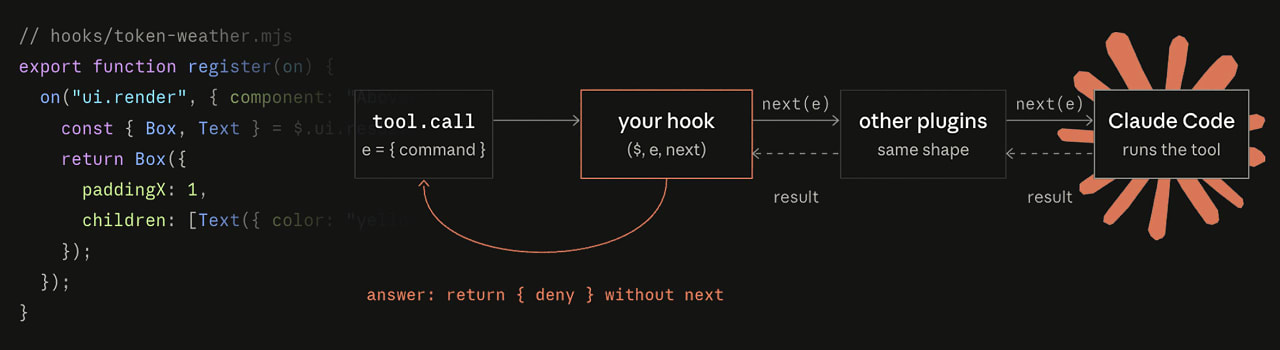
Getting Started with Claude Code Mods — Claude Code has just added support for Mods, a way to extend the agentic coding harness with JavaScript so you can watch events, change behavior, and draw custom UI. Addy builds a mod here in ~80 lines that shows a live 'forecast' of your context window.
100+ Search Engines. One Simple API — Build with real-time data from Google, YouTube, Amazon, and more. SerpApi delivers structured JSON and Markdown for AI agents and your apps. Skip scraping headaches.
Effect 4.0: A Smaller Core, Rebuilt Runtime — A ground-up rewrite of the popular library for building reliable apps that handles tricky stuff like resource management, concurrency, retries, typed errors, and more. v4.0 boasts 5x smaller minimal bundles and 86% less memory used per concurrent task.
🤖 Pi 1.0, the minimal Node.js-based coding agent, adds MCP and non-LLM model support through 'Codemode'. They also launched an experimental Pi Durable runtime for running resilient, long-term agent flows.
How Anthropic Made Claude's Apps 3x Faster in Two Weeks — A grab bag of performance lessons from a sprint that cut p75 'time-to-typeable' from 3.1s to 0.55s. Em dashes (the irony!) pushed V8 onto a slower regex path, a stray location.reload() caused half a million hidden reloads a day, and more.
Wang, Attard, and G (Anthropic)
Still Writing Tests? Meticulous Is Here — Notion, Dropbox and Wiz are now using a testing paradigm they can’t ship without. Built by former Palantir engineers, Meticulous creates an evolving suite of deterministic E2E UI tests, delivering exhaustive coverage with zero developer effort.
Meticulous AI sponsor
Vite+ 1.0: One CLI for Your Entire JavaScript Toolchain — The single vp command can now manage your Node runtime (if you wish), package manager, dev server, linting, formatting, testing, builds and task running, configured from vite.config.ts. vp migrate can be used to bring existing Vite, Vitest, ESLint, tsup, and similar setups into Vite+.
🎉 Cloudflare finally has a single CLI for all of its APIs. cf is written in TypeScript and covers everything, whereas Wrangler only ever covered a subset.
MSW (Mock Service Worker) 3.0 – The popular API mocking library is now ESM-only, adds a Vite plugin, supports GraphQL subscriptions, and can intercept page navigations and form submissions.
Vinext 1.0 – Cloudflare's Vite-based Next.js reimplementation now supports the Pages and App Routers, and offers a migration path for existing apps.
Mermaid 12.0 – The diagramming tool now defaults to the ELK layout engine for flowchart, class, state and similar diagrams, so existing ones will look different unless you set layout: dagre. Also adds UML use case diagrams.
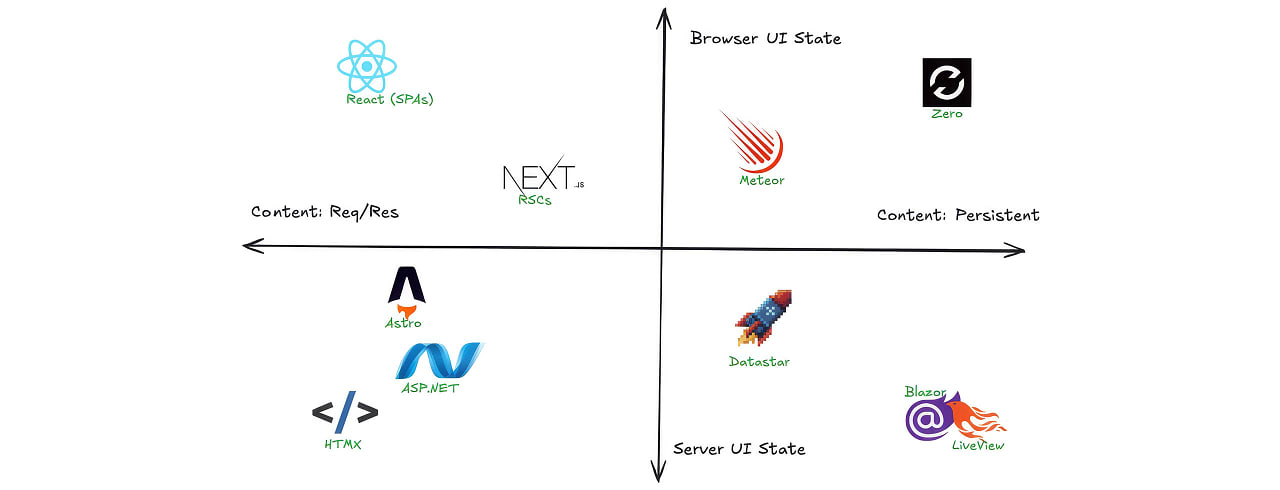
The Grand Unifying Architecture of Frontend — SolidJS's creator argues that HTMX, React, LiveView, and friends differ mostly in how they split the same three jobs (navigation, content, and instant UI feedback) between client and server. He then shows how Solid 2.0 aims to cover the whole spectrum.
Optimizing Objects with null Prototypes — In V8, objects created with { __proto__: null } or Object.create(null) start in a slower 'dictionary mode'. Matteo shows how creating a plain object and then setting its prototype to null preserves fast properties.
Matteo Collina
💡 If you fancy going deeper, Fast properties in V8 is the V8 team's 2017 explainer of how objects switch between fast and 'dictionary' mode.
Node.js Built-ins That Replace npm Packages — A tour of 12 Node built-ins that replace common ecosystem packages along with their stability levels and some gotchas that might keep you using the established alternatives.
Flavio Copes
📄 JavaScript's Greatest Pun? ${{ }} – Looks like Mustache, but ${{ name }} passes an object using shorthand properties to a tag function, preserving both the variable's name and value. Nishant Shukla
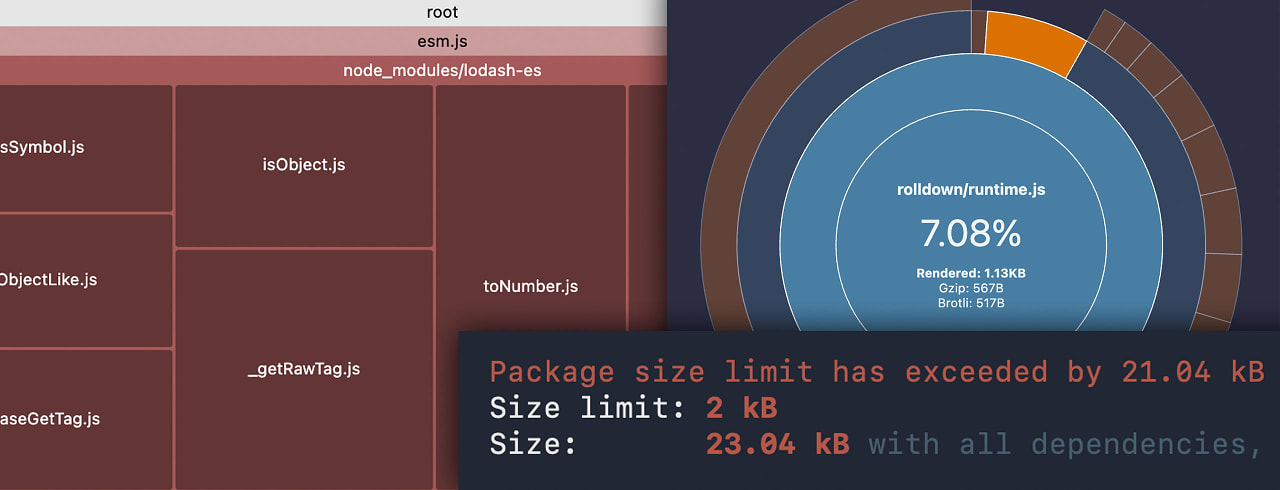
Size Limit: A JavaScript Performance Budgeting Tool — Set a size or load-time budget for your code and this tool can fail CI (or flag a PR) if a change goes over it. You can also do one-off checks and see visualizations of where the bytes are. Framework-agnostic and doesn’t care which bundler or CI you use.
EmDash 1.0: Cloudflare's WordPress 'Successor' is Now Stable — An Astro-based alternative to WordPress, now with a decentralized AT Protocol-based plugin registry and plugins that run in sandboxes. It’s not Cloudflare-only, either, as it also runs on Node.js.
Buscemi, Kane, and Pham (Cloudflare)
📝DOCX 9.8: Generate Word .docx Files from JavaScript — A comprehensive library for generating docx files. It’s only a few months since we linked to it, but this is a big release with support for charts, shapes and watermarks, plus more math notation support. (Homepage.)
Dolan Miu
🔊 wavesurfer 8.0 – Popular audio waveform renderer and player. Refactored for better efficiency, with numerous bug fixes.
pretty-bytes 7.2 – Convert byte quantities into human readable strings.
✉️ postal-mime 4.0 – An email parsing library that works everywhere.
Typia 15.0 – Turn pure TypeScript types into runtime validators.
📰 Classifieds
The future of mobile development is agentic. For years, mobile shipped slower than the web. Now, agents are coding/testing/shipping all on Expo.
🤖 Blocking all bots breaks AI agents. Blocking none invites fraud. Fingerprint tells verified agents from bad actors.
SurveyJS: Build complex forms faster with a drag-and-drop builder for any JavaScript app. Self-hosted and backend-agnostic.
Git 2.56 has just been released. It adds git add --resolved to safely stage merge conflict fixes, git branch --delete-merged for bulk branch cleanup, and more. All explained within.
TanStack's Tanner Linsley built Redact, 'an alternative logical projection of React' aiming for full API compatibility with a simpler implementation, smaller bundles and better performance. It's now on GitHub.